What Goes Into Designing a Material Handling System for a Factory?
A material handling system is often judged by how smoothly it moves a load from one point to another. But that movement is the outcome of several engineering decisions made long before the system is installed.
Every manufacturing facility has its own requirements. The nature of the load, the available space, the production process and the frequency of movement all influence how a handling system should be designed.
A system that works efficiently in an automotive assembly plant may not be suitable for a fabrication workshop, even when both facilities handle loads of similar weights.
So, what does it take to design a material handling system that fits the application?
Understanding the Load and the Handling Task
The starting point is understanding what needs to be handled.
Weight is an important consideration, but engineers must also evaluate the load's dimensions, shape, centre of gravity and handling requirements.
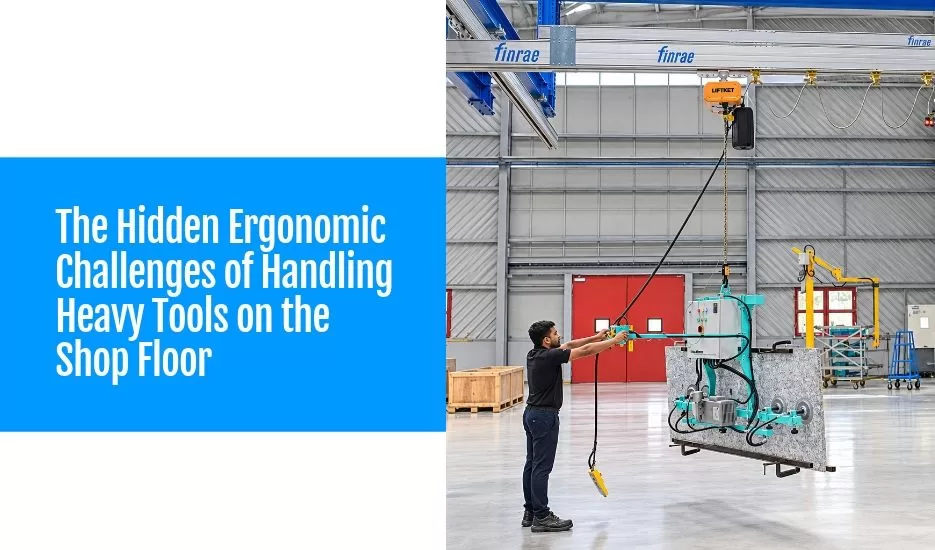
For example, transferring a large sheet-metal component requires a different approach from positioning a welding gun or supporting an assembly tool.
The handling task also matters. Does the load need to be lifted, transferred, rotated or positioned precisely? Will it move between two fixed locations or across several workstations?
These details help determine the appropriate handling equipment, rail arrangement and supporting components.
Studying the Movement Within the Workspace
Material handling design begins with understanding how people, equipment and components move through the production area.
Engineers need to consider the distance travelled, direction of movement, available clearances and surrounding machinery.
A system should provide access to the required working positions without creating unnecessary interference with other operations.
This is particularly important in facilities where multiple processes operate close to one another.
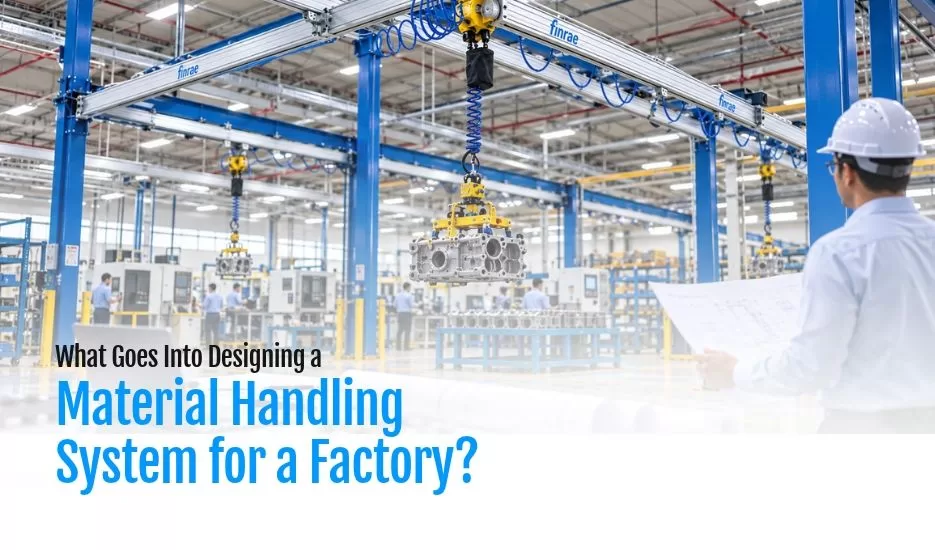
For overhead handling applications, different rail configurations can be considered based on the required movement pattern and coverage area.
Evaluating the Supporting Structure
A handling system must be compatible with the structure that supports it.
The available mounting points, building dimensions, structural capacity and installation conditions influence the final design.
Engineers must evaluate the loads transferred to the supporting structure and select suitable mounting and suspension arrangements.
These assessments are essential because the performance of the complete system depends on more than the load-carrying components alone.
Selecting the Right System Components
Once the application requirements are established, the next step is selecting compatible components.
Depending on the task, the system may involve rail profiles, trolleys, suspensions, hoists, balancers, grippers and cable-management arrangements.
Each component has a specific role.
Rails define the travel path, trolleys enable movement, suspensions connect the system to its supporting structure, and handling equipment supports or manipulates the load.
The components must work together as an engineered arrangement.
Considering Installation and Maintenance
A system may be technically suitable for an application but difficult to install or maintain within the available facility.
Installation access, assembly requirements, inspection points and maintenance procedures should therefore be considered during design.
Modular aluminium rail systems can offer practical advantages through compatible profiles and mechanical connections, although installation requirements depend on the specific configuration.
Planning for maintenance access also helps ensure that the system can be inspected and serviced as required.
Designing for the Application
There is no universal material handling arrangement suitable for every factory.
An effective solution begins with understanding the task and translating its requirements into a practical engineering design.
Finrae offers modular aluminium rail systems, tool rails, trolleys, suspensions and related components for industrial material handling applications.
With appropriate engineering consultation and system selection, these components can be configured around different handling requirements.
Planning a material handling system for your facility? Connect with the Finrae team to discuss your application, workspace and technical requirements.